AI needs structure
The most useful AI conversations are the ones that turn into something. A budget. A schedule. A decision. We're trying to make that easy for everyone, not just people with the patience to herd a long chat session.

Pango
May 27, 2026·4 min read
Talk to an AI long enough about something real — a renovation, a move, a trip, picking a school, deciding on a job offer — and the same pattern shows up. The early hour is great. The model is sharp, the back-and-forth is fast, you're filling it in on the situation and it's helping you think. Then somewhere around message forty, you ask a follow-up that depends on something you established earlier, and the answer is wrong. Or the budget figure has drifted. Or it's quietly hallucinated a number you never gave it. You scroll up. The detail was there. The chat just lost it.
There's nothing wrong with the model. The problem is the shape of the surface. A long chat is a transcript, and a transcript is a terrible storage format for a plan.
Most of the AI use cases we care about — and that we keep watching friends and family bounce off of — aren't one-shot questions. They're things that have moving parts and that get worked on over weeks. Renovations. Trips. The household budget. A weekly rhythm with the other parents. A wedding. A founding team's decisions in the first year. These are the places where the AI could do the most good and where the format is most working against it. You don't want the AI's answer once. You want the state — the up-to-date budget, the current itinerary, the decision and why you made it — alive somewhere you can come back to.
The fallback most people land on is some mix of Google Docs, text threads, and email. It works the way it works: barely. Someone makes a doc. Someone forgets the doc exists. Two people make a different doc. The email about the contractor's revised quote never gets pasted into either. By week three, the real source of truth lives in nobody's head and everybody's notifications. The same thing happens when one person tries to keep the AI's chat thread tidy by hand — it becomes a part-time job and they quit.
There's a sentence we keep coming back to:
The structure has to be a byproduct of the conversation, not a separate task.
That's the thing we're trying to build. Not another chat window. Not a smarter Google Doc. A workspace where:
- The conversation feels like the easy thing it should be — group chat, mostly, with the AI sitting in the room.
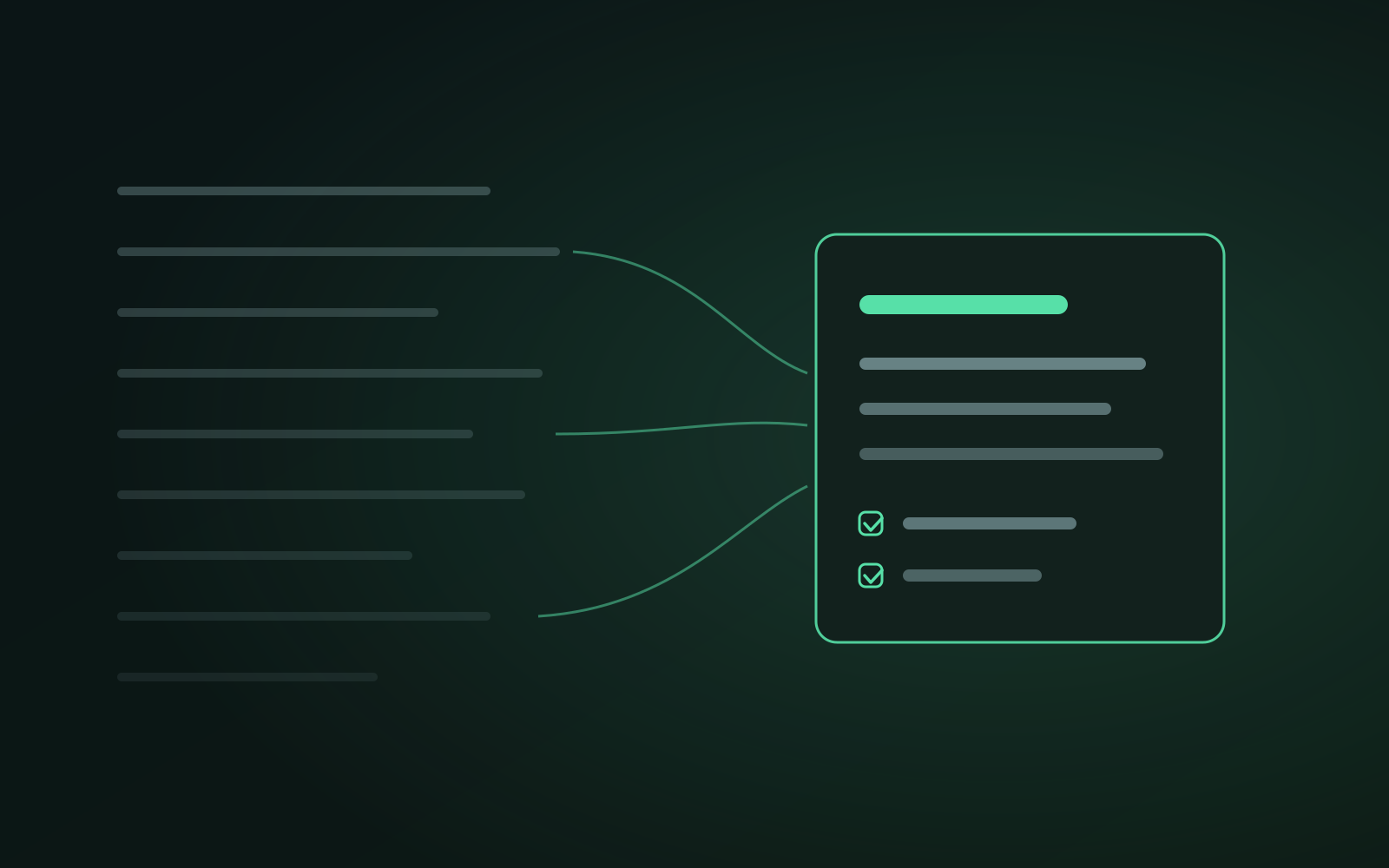
- The structured outputs build themselves from that conversation as it happens. The budget updates when a quote lands. The schedule shifts when a dependency moves. The decision gets recorded when the group lands on it — including what you decided against, and why.
- You can scroll the chat when you want to remember how you got somewhere. But you don't have to. The artifacts are the answer to "where did we land?" — and they're correct, because the AI maintained them turn by turn.
The audience we want this to work for is not the people who've already figured out how to wring AI for everything it's worth. They're fine. They'll keep their long threads and their personal systems and they'll do alright. The audience we're after is the four-person group planning a kitchen renovation, the family making the budget for the year, the two friends putting together a long weekend with eight other people, the small team working through whether to take a contract. People who'd benefit from AI's good ideas and don't have time to herd them out of a chat window.
For that to work, the structure can't be optional. It can't be "click here to extract a budget from this conversation." It has to be the thing the product is. Open a Space for the renovation; the budget, the schedule, the decisions, the packing list, the things-we-still-need-to-figure-out — they're all there from the start, even if they're empty. The conversation flows in, and they fill themselves out.
We don't think this fixes everything. There's a long list of places we know the structure has to bend — partial decisions, edits that someone wants reverted, conflicts where two people remember the same conversation differently. We're building for those. But the bet is that the format is what's been blocking ordinary people from getting durable, useful work out of AI for the planning that matters most. The chat is the input. The artifacts are the output. Nobody has to keep them up by hand.
That's the version of AI we want to make easy.